







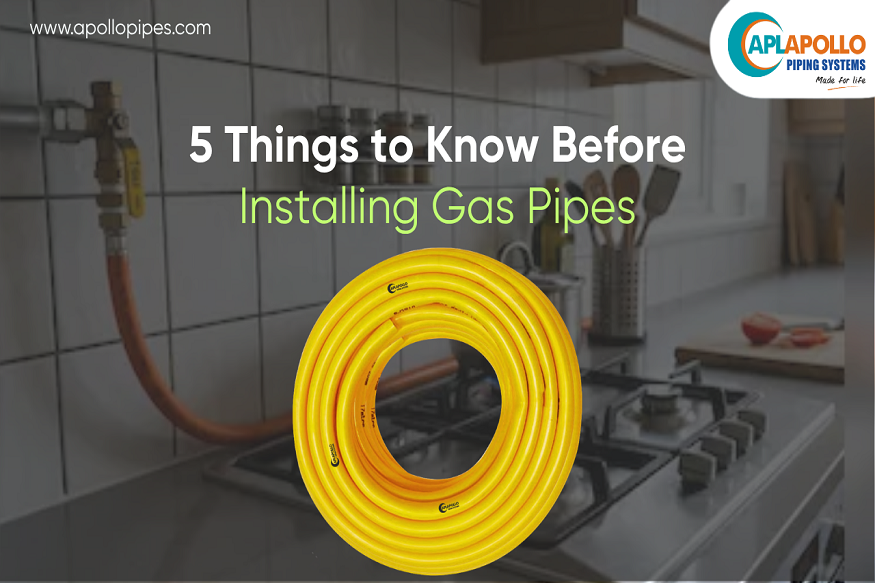
Installing a gas piping system requires careful planning because the pipes must be compatible with the gas being transported, operating conditions, and installation environment. Before selecting gas pipes, consider the material, pressure requirements, pipe dimensions, joining method, durability, and applicable standards. These factors can influence the reliability and maintenance requirements of the overall gas distribution system.
1. Choose the Right Pipe Material
Material selection is one of the first decisions when planning gas pipe installation. The pipe should be designed and approved for the intended gas application and installation conditions.
MDPE (Medium-Density Polyethylene) and HDPE (High-Density Polyethylene) are commonly used polyethylene materials in gas distribution systems. Their characteristics include flexibility, corrosion resistance, and suitability for underground applications. However, the choice between MDPE and HDPE should depend on factors such as pressure, pipe diameter, application, and project specifications.
Read More: Get closer to your home’s value before you sell
For underground gas pipes, the surrounding soil, environmental exposure, installation conditions, and required mechanical properties should also be considered.
2. Understand Pressure and Pipe Specifications
Gas pipe pressure requirements should be established before selecting a piping system. Choosing a pipe simply by diameter is not sufficient; the complete system needs to match its intended operating conditions.
Important specifications include:
- Pipe diameter: Determines the physical size of the pipeline and forms part of the system’s flow and design calculations.
- SDR (Standard Dimension Ratio): Describes the relationship between a pipe’s outside diameter and wall thickness.
- Material grade: Different polyethylene grades, such as PE 80 and PE 100, have specific characteristics that need to be matched to the application.
- Operating pressure: The selected pipe and fittings must be suitable for the pressure requirements of the project.
These specifications should always be selected according to applicable gas pipe standards, project requirements, engineering calculations, and qualified professional guidance.
3. Plan the Installation and Joining Method
A well-planned installation helps ensure that the gas piping system is assembled correctly and remains suitable for its intended service conditions. Route planning, trench conditions, pipe handling, fittings, and joining procedures should be considered before work begins.
Polyethylene gas pipes can be joined using methods such as butt fusion and electrofusion, while approved mechanical fittings may be used where applicable. Properly executed gas pipe joints are an important part of maintaining system integrity.
Because gas piping involves specific safety and regulatory requirements, installation, pressure testing, inspection, and commissioning should be performed by qualified professionals in accordance with applicable local codes and standards.
4. Consider Durability and Long-Term Maintenance
The installation environment can affect the long-term performance of a gas pipeline. When selecting a piping system, consider exposure to moisture, soil conditions, temperature variations, mechanical stresses, and other environmental factors.
Polyethylene gas pipes are considered for applications where flexibility and corrosion resistance are useful characteristics. However, the overall durability of a gas distribution system depends not only on the pipe material but also on design, installation quality, joining practices, operating conditions, and maintenance.
A suitable system should therefore be evaluated as a complete installation rather than on pipe material alone. Proper records, inspection procedures, and maintenance practices can also help support long-term system reliability.
5. Check Standards, Certifications, and Product Quality
Before purchasing gas pipes, verify that the products meet the standards and requirements applicable to the intended installation. Product documentation should provide relevant information about material grade, dimensions, pressure-related specifications, testing, and certification.
It is also useful to consider:
- Manufacturer reputation and technical support
- Product traceability and documentation
- Applicable national and project-specific standards
- Availability of compatible gas pipe fittings
- Quality-control and testing information
- Installation and handling guidance
Selecting a product from an established manufacturer can make it easier to verify technical information and maintain consistency across the gas piping system.
What Should I Consider Before Installing Gas Pipes?
Before installing gas pipes, consider five key areas: material suitability, pressure and pipe specifications, installation and joining methods, long-term durability, and applicable standards and certifications. The selected system should match the type of gas, operating conditions, installation environment, project specifications, and relevant regulations. Gas piping work should be handled by qualified professionals.
Frequently Asked Questions About Gas Pipes
What are the main types of gas pipes?
Gas piping systems can use different materials depending on the application and applicable requirements. MDPE and HDPE are important polyethylene options used in gas distribution. The appropriate material depends on factors such as gas type, pressure, diameter, installation environment, and project specifications.
Are MDPE and HDPE pipes suitable for gas distribution?
MDPE and HDPE are used in gas distribution systems, including underground applications. Their suitability depends on the specific pipe specification, gas service, pressure, installation conditions, and applicable standards. The selected product should be specifically designed and approved for the intended gas application.
What factors should be considered when selecting gas pipes?
Key factors include the type of gas, operating pressure, pipe diameter, SDR, material grade, installation environment, joining method, and applicable standards. Product quality, certification, traceability, and availability of compatible fittings should also be considered before final selection.
How are polyethylene gas pipes joined?
Polyethylene gas pipes may be joined using methods such as butt fusion, electrofusion, or approved mechanical fittings, depending on the system and application. The selected method and installation procedure should follow the manufacturer’s instructions, project specifications, and applicable standards, with the work performed by appropriately qualified personnel.
Read More: The Power of Outdoor Signage: How to Stand Out in a Crowded Urban Environment
How long can gas pipes last?
There is no single service-life figure applicable to every gas piping installation. Longevity depends on the pipe material and specification, installation quality, environmental conditions, operating conditions, and maintenance. Buyers should refer to manufacturer information and applicable standards rather than assuming a fixed lifespan for every system.
APL Apollo Gas Pipes
APL Apollo offers a Gas Pipes for domestic and industrial applications, with the manufacturer’s product page listing applications involving natural gas/vaporized LPG, industrial gases, biogas, propane, and other gas-related uses. The listed pipe range is 20 mm to 315 mm in SDR 11 and SDR 17, while EF fittings are available from 20 mm to 355 mm for the pressure categories stated by the manufacturer. Straight lengths are available in 6 m and 12 m, with coils available up to 140 mm OD. Material grades include PE 80 (Yellow), PE 100 (Orange), and PE 80 & PE 100 (Black). The page also lists characteristics including flexibility, corrosion resistance, lightweight construction, ISI certification, leak-free joints, and easier installation and maintenance.





+ There are no comments
Add yours